Friday, 31 July 2026

Another day's cataloguing

 Glorious blue sky but absolutely freezing this morning up at the Athenaeum with ice in the outside toilet washbasin until noon.

However, this time I had the sense to wear a pair of wool socks, coupled with a merino t-shirt under my jumper, so I stayed warm, even if I perhaps looked a bit like the Michelin man.

As an experiment we've replaced the classic cardboard tent moth traps with dome traps, with the idea that the contents will be less likely to leak and damage the books or artefacts if they get forgotten about or if the liquid starts to flow more than expected over a run of hot summer days


Cataloguing itself was fairly straightforward with the usual mix of late nineteenth century sensation novels that have been long forgotten such as this 1874 potboiler, still with Mudie's labels on the cover


and the usual mix of cirme and mystery novels from the 1930s and 40s. It's noticable how poor the quality of the paper is in the nineteen thirties, and especially the nineteen forties novels, compared with that of sensation novels from the 1870s and 1880s.

I'm ascribing this to printers still using either rag paper or paper made from mixture of rag and woodchip pulp in the nineteenth century, but by the 1930s they were using woodchip almost exclusively.

The nineteen forties books are particularly bad - something that I put down to war time economy measures and a mix of recycled paper and virgin pulp, producing paper that after eighty years is distinctly yellow and brittle, and will almost certainly be a conservation challenge down the track...

Sunday, 19 July 2026

Juvenal or Juvenile

 The last week or so, my bedtime reading has been Lindsey Davis's 'Murder in Purple and Gold' which takes place against the background of the Roman Floralia festival.

I must confess to a weakness for Lindsey Davis's Roman mysteries, and despite being complete fantasy, they are impeccably researched and the background is accurate.

Now, despite my deep fascination with Roman history, I didn't know much about Floralia. 

This isn't unusual, there's not that much known other than the festival is said to have been implemented around 238BCE during the early, not quite mythical, period of the republic and was in response to a series of very wet cold springs.

In an agrarian society, dependent on what they could grow locally, which was the case in the early republic, a series of wet cold springs when the crops didn't start to grow properly meant hunger, and possibly starvation. It's possible that this was due to volcanic activity, but no one really knows.

Anyway Floralia started as a festival of fertility and new growth. What form it took at the beginning  is not known, or even whether there had been some earlier agrarian festivals that were formalised into Floralia.

Fast forward to the end of the first century CE.

Floralia was still going strong. Unlike many Roman religious festivals it was light on austere ceremony and had evolved into a raunchy raucous celebration of life including naked acrobats of both sexes, nude dancing  and naked prostitutes dressed up as gladiators (basically minimal pretend armour and not a lot else) engaging in mock gladiator fights.

Well that's what we think anyway. Actual written sources are fairly sparse. There's a reference to Cato going into a tent where a naked comedy was being performed, and walking out in disgust, some prim later writers expressing po-faced disapproval, and the satirist Juvenal, who provides some fairly ambiguous descriptions of what went on in satire#6.

Basically, it seems to be the case that everyone knew what went on, the Roman fun police disapproved, and not many people wrote about it, or if they did, what they wrote didn't survive.

And this is my cautionary tale.

Being a geek, I thought I'd see what various historians had written about Juvenal's descriptions of Floralia and the associated events by searching for

'juvenal naked dancers floralia'

which while it might not be the sort of thing you would do at work, is eminently justifiable as a search.

Unfortunately Google didn't think so, decided I couldn't spell juvenile, and cautioned me about searching for abusive material.

Perhaps I should have capitalised juvenal, or omitted his name entirely from the search string, but there you go, what's done is done.

Incidentally, this isn't the first time I've had problems with the word juvenile

While documenting the contents of Lake View, I came across a number of children's books produced by a company called Juvenile Productions in the 1930s that seems to have little or no trace of itself. Most of the books are reprints of earlier children's stories, and had titles that included words like 'fairy'.

At the time of publication there was probably no hint of nastiness linked to the title, but now, we live in a different world...

Friday, 10 July 2026

Moth traps - a cautionary tale

 Well, we had a near miss up at the Athenaeum today.

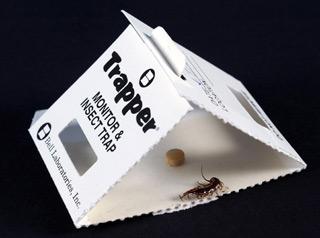
Like a lot of similar bodies we use sticky moth traps a bit like the ones below to minimise the risks of insect damage 


all good.

Good practice is that you put the moth traps in the display cabinets, date them, check them in a month or so, and either replace them or remove them as not required.

These traps work by having a layer of glue on the base of the triangle and the idea is that the insect or other nasty gets caught in the glue.

And now for the cautionary part of the story.

I was cataloguing some nineteenth century novels this morning and found a moth trap that had been placed on top of the novels in the display case.

The books had been wrapped in mylar bags (a bit like kitchen ziplocs) as they were in poor condition, with broken spines, insect damage and the like.

The insect traps had been dated to late 2019/early 2020 and had not been removed or replaced, and the glue, which is thixotropic, had flowed off the trap and on to the mylar bags.

Fortunately no damage had been done to the books and it was simply a matter of removing the moth trap and then replacing the sticky bags with new ones.

The dates are significant, just before the pandemic when everything was locked down, and importantly, a lot of voluntary organisations saw a significant turn over, with people simply not coming back after the lockdowns were over, and other people taking their place.

This of course meant that any handover of duties was patchy at best, and some things simply got missed.

The solution is simple, a search and destroy mission for any other outdated moth traps, as well as checking for damage, and putting in place a task calendar to ensure that the traps are checked regularly in the future.

And why am I airing our dirty linen in public like this?

Well, we're not the only volunteer run organisation in the world, and I'm sure other organisations must have had a breakdown in procedure like we did.

And I'd like to emphasise that no one did the wrong thing, it's just that in a period of churn things get lost. In this case we got away with it, another time we might not be so lucky...